
Scientific Research.
We investigate the loop of Materials, Energy Harvesting, Energy Storage, and Smart Electronics to develop next-generation battery-free autonomous technologies.

Our Research Philosophy
SRE² Lab develops sustainable and self-powered technologies that reduce battery dependency and environmental impact. We harness ambient and wasted energy using triboelectric, piezoelectric, thermoelectric, and waste-derived technologies, and store it in advanced supercapacitors and microsupercapacitors, and micro-batteries. We integrate these technologies into self-powered sensors, electronic skin, flexible biosensors, and intelligent sensing systems. Our research combines energy harvesting, storage, sensing, sustainable materials, and AI-enabled technologies to create autonomous systems. These innovations target healthcare, wearable electronics, soft robotics, IoT, aerospace, defense, and smart cities.
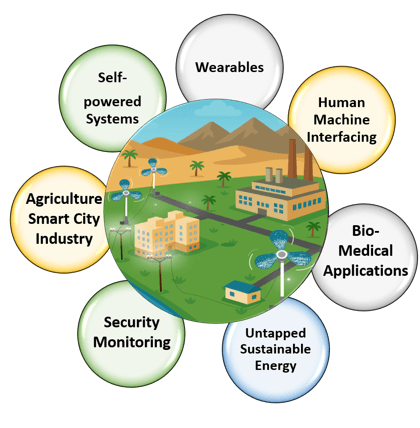
Core Domains of the SRE² Ecosystem
Scientific Capabilities
Complementary Research Axes.
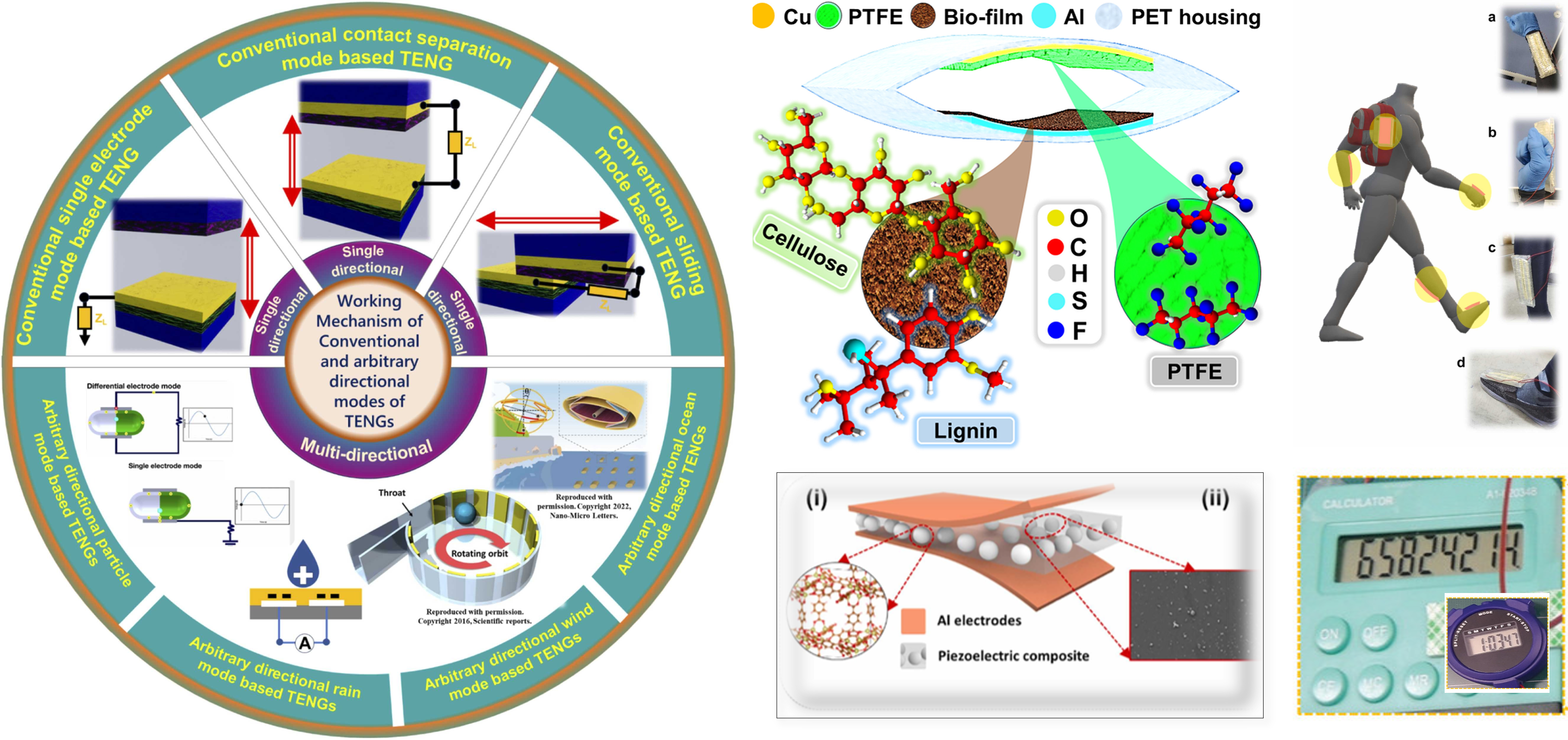
Novel Trends in Renewable/ Sustainable Energy Generation
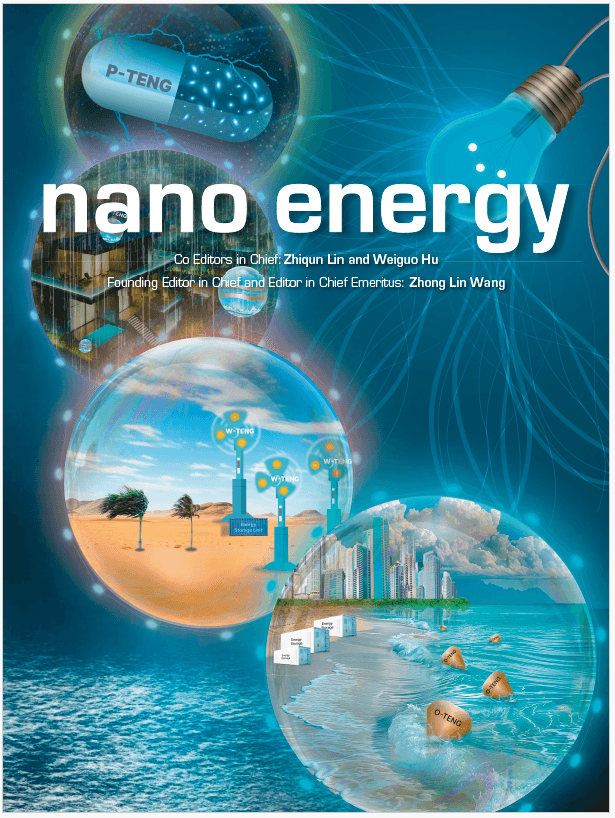
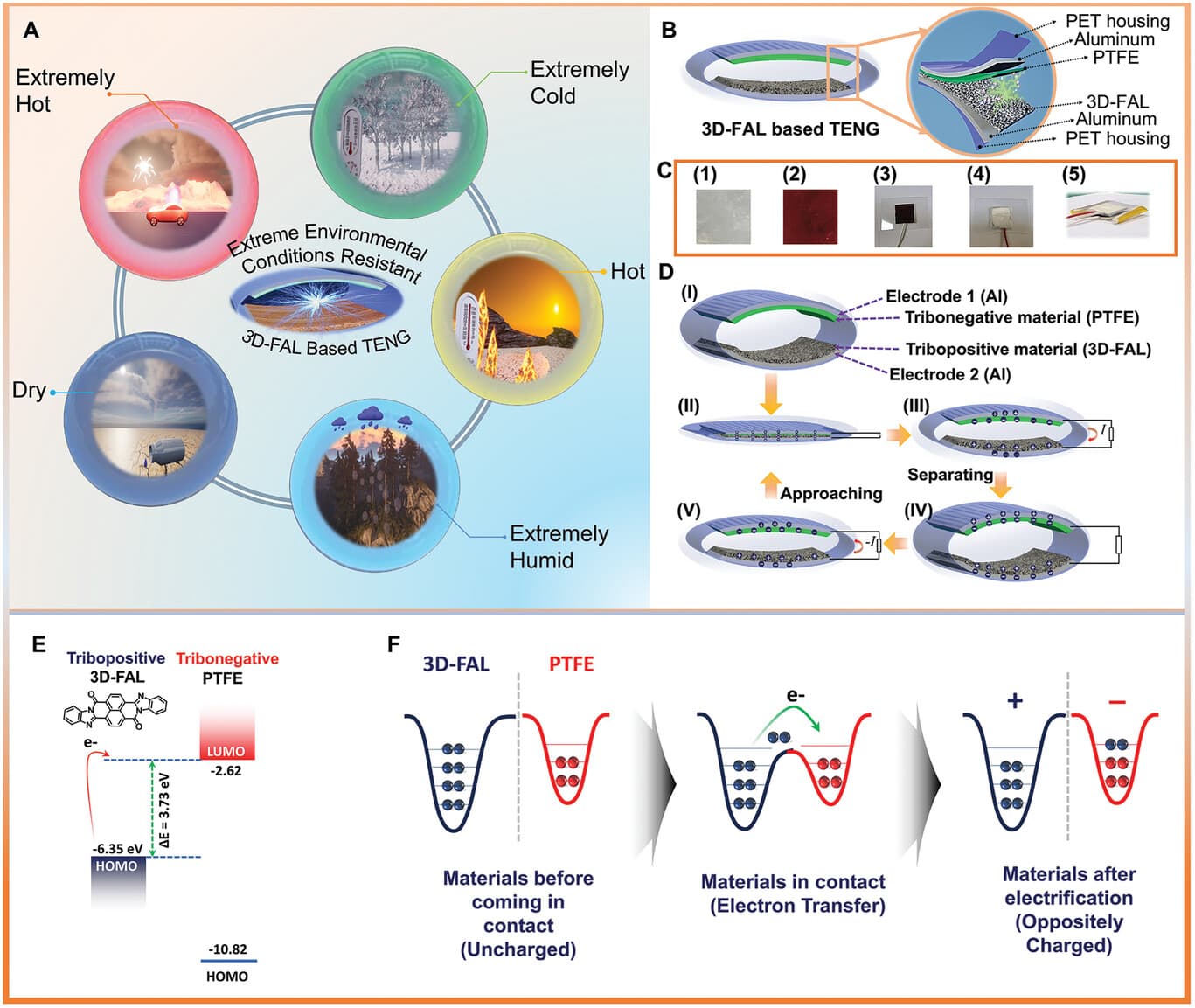
Our research focuses on emerging approaches for renewable and sustainable energy generation. We explore innovative technologies that convert renewable, ambient, and otherwise wasted energy into usable electrical power, including Triboelectric, Piezoelectric, Thermoelectric nanogenerators, and waste-derived energy technologies. By integrating advanced functional materials, nanostructures, and intelligent device architectures, our research aims to develop efficient, flexible, and sustainable energy-generation systems for next-generation smart systems.
Topics & Technologies
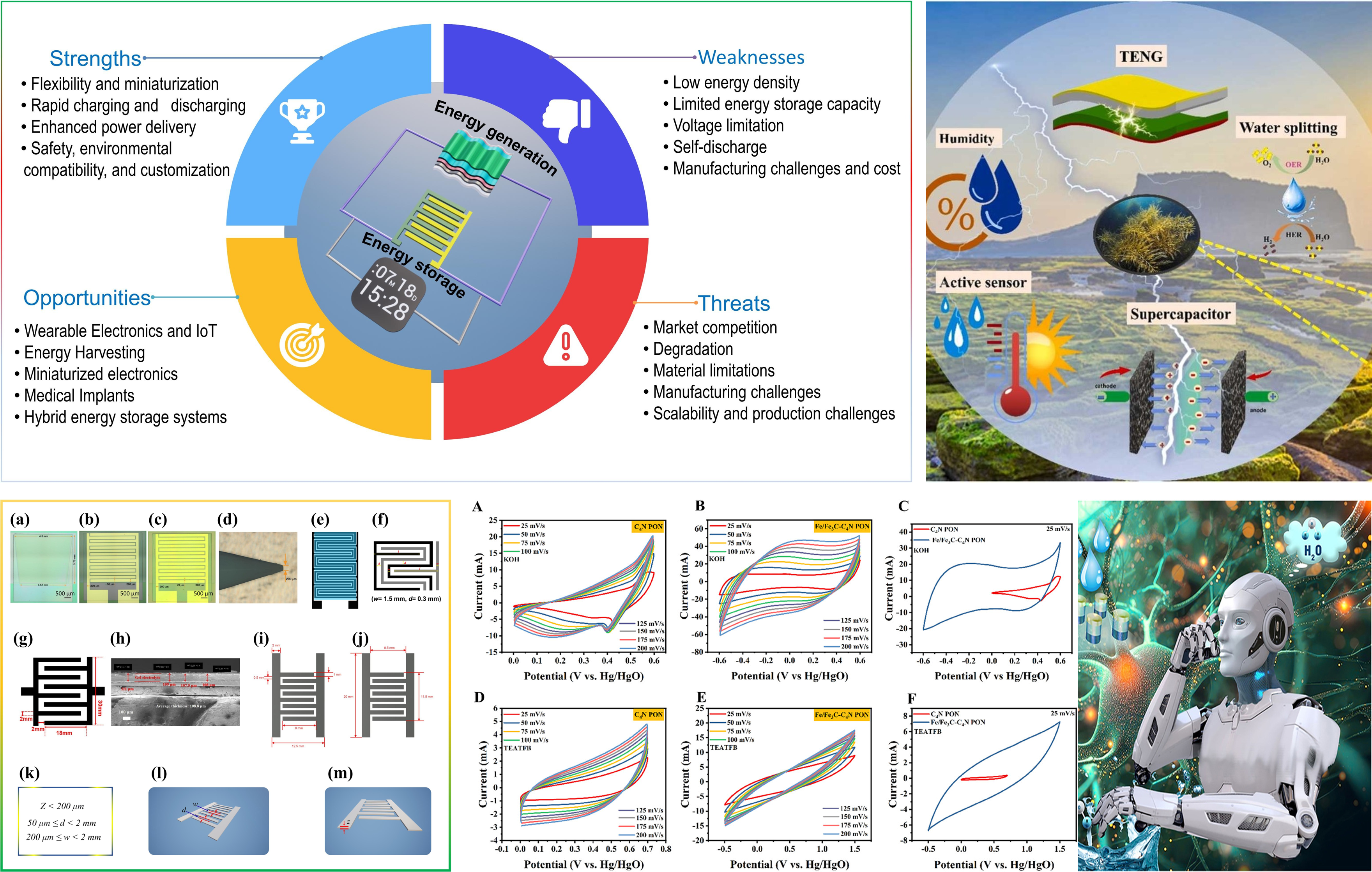
Advanced Energy Storage & Self-Powered Systems
Our research focuses on next-generation energy storage technologies for compact, flexible, and autonomous electronic systems, with particular emphasis on supercapacitors, microsupercapacitors, and self-powered energy-storage systems. We investigate advanced electrode materials, nanostructured architectures, sustainable materials, and novel device configurations to achieve high energy density, rapid charge–discharge capability, long cycle life, and mechanical flexibility. By coupling emerging energy-generation technologies such as triboelectric and piezoelectric nanogenerators with advanced micro- and supercapacitors, our research aims to establish integrated self-powered systems capable of harvesting ambient and renewable energy, storing it efficiently, and delivering power on demand for wearable electronics, wireless sensors, soft robotics, IoT devices, and next-generation autonomous systems.
Topics & Technologies
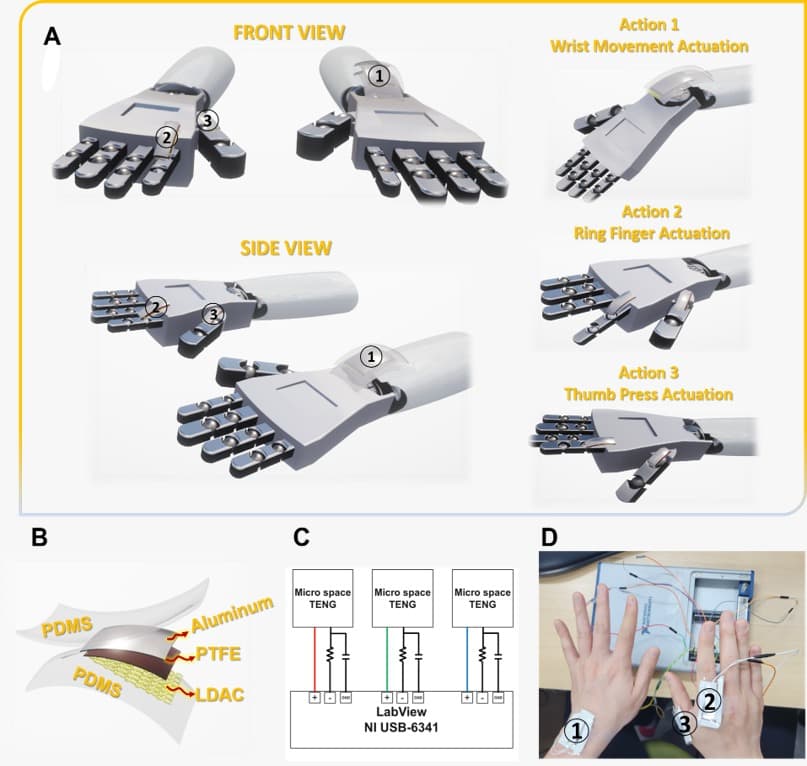
Self-Powered Multifunctional Sensors and Electronic Skin
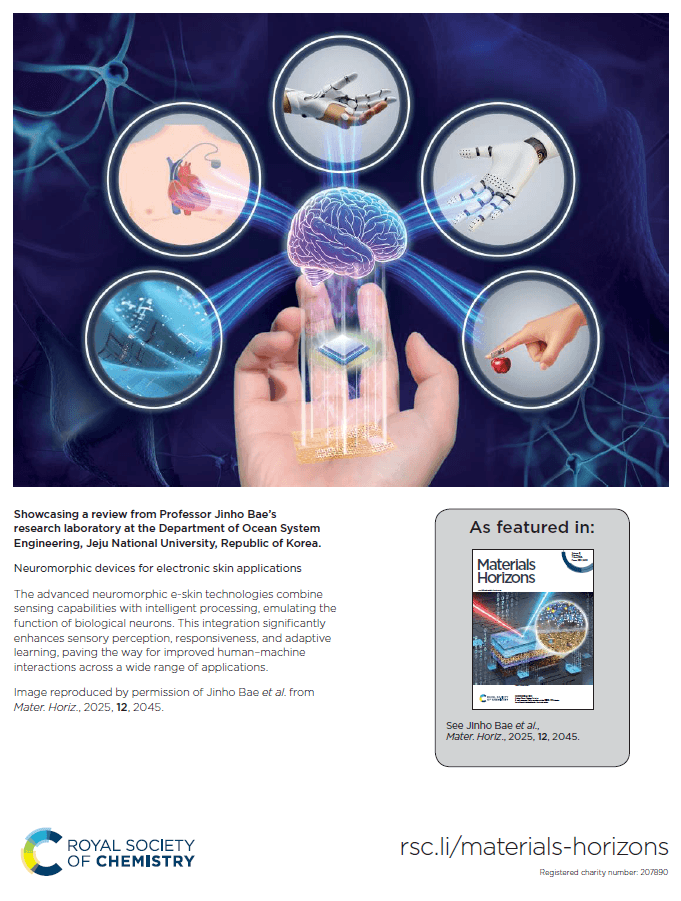
Our research focuses on self-powered, flexible, and multifunctional sensing systems for next-generation wearable electronics, electronic skin, human-machine interfaces, smart healthcare, and intelligent environments. We develop triboelectric and piezoelectric nanogenerators, pressure and tactile sensors, strain sensors, humidity and environmental sensors, and flexible biosensors capable of detecting mechanical, environmental, and physiological signals. By integrating energy harvesting with sensing, our goal is to create battery-free, low-power, and self-sustained sensing platforms that can enable continuous monitoring, intelligent interaction, and sustainable wearable technologies.
Topics & Technologies
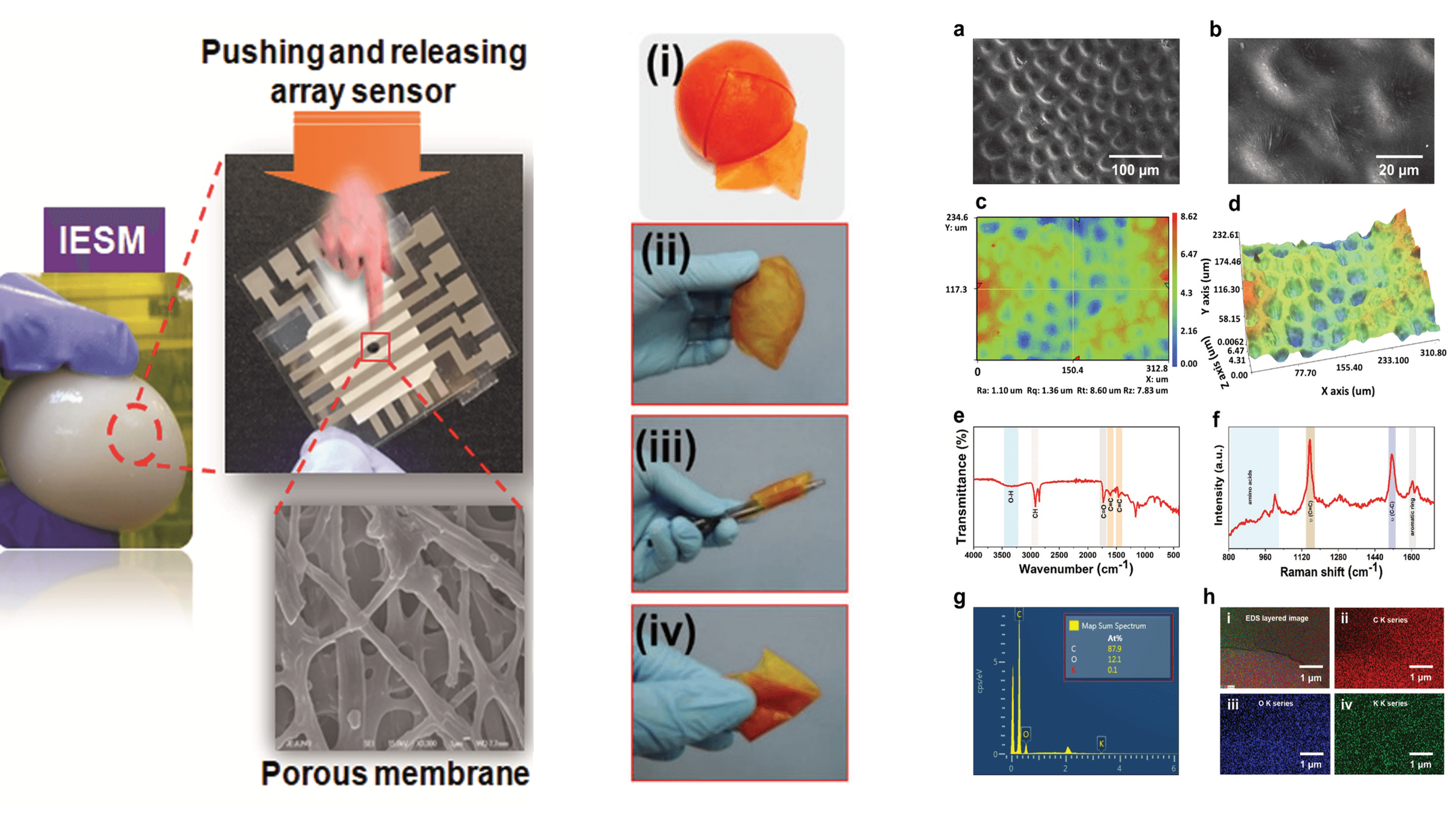
Nature-Inspired Platforms for Smart Technologies
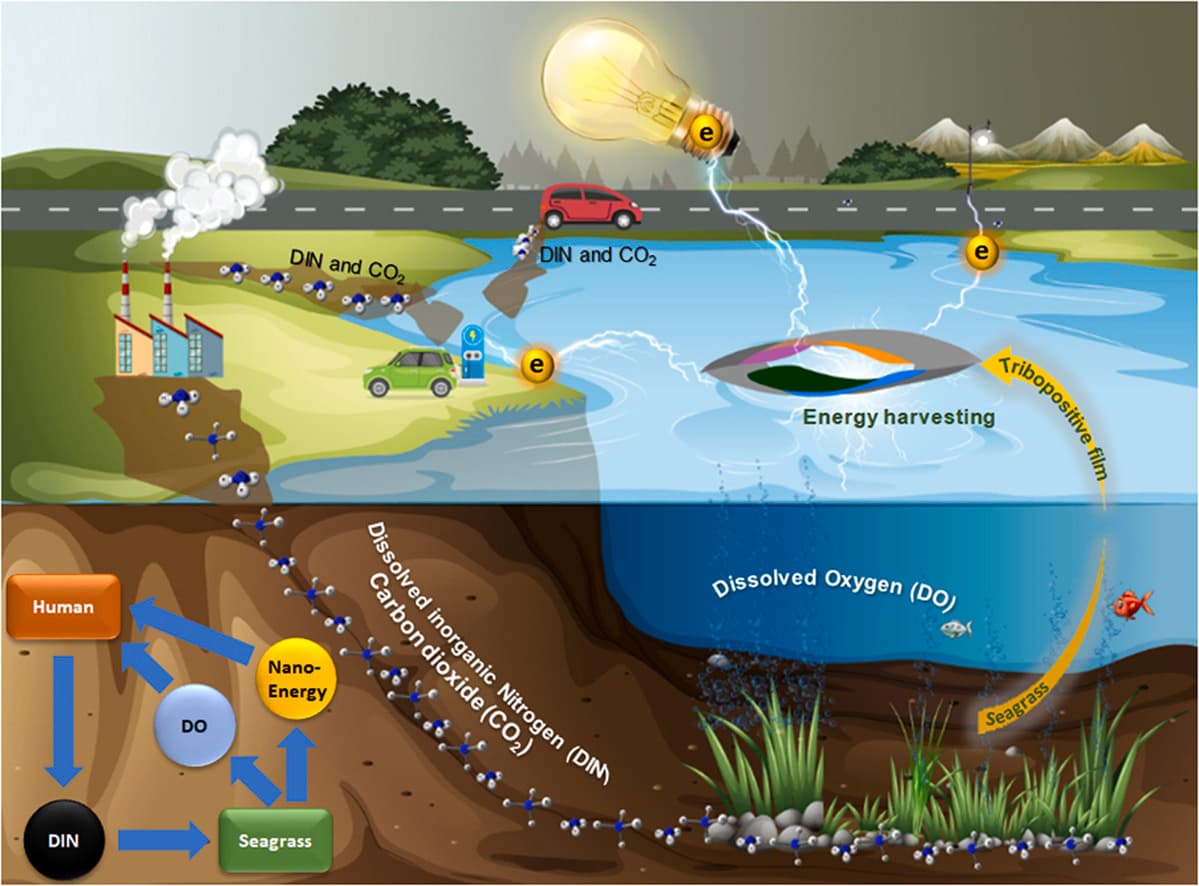
Our research explores functional biofilms as sustainable platforms for energy generation, storage, and sensing. We investigate biofilm-based systems that can harness micro-activity to generate electrical energy, while exploring their integration with energy-storage materials and self-powered sensing technologies.
Topics & Technologies
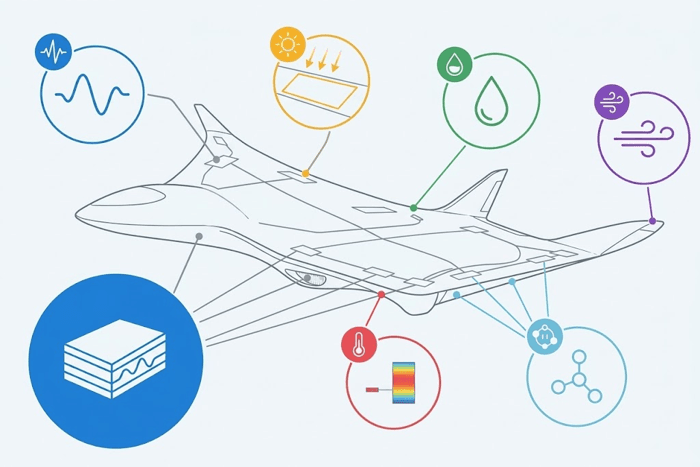
Advanced Sensing Technologies for Aviation and Space
Our lab focuses on the design and development of self-powered, multifunctional sensing technologies tailored for aerospace applications. By combining materials science, flexible electronics, and energy harvesting techniques, we aim to create sensors capable of withstanding the extreme mechanical, thermal, and environmental conditions found in aircraft and space systems-enabling smarter, lighter, and more autonomous monitoring solutions for the future of aviation and space exploration.
Topics & Technologies
Strategic Applications
Strategic Research Pillars.
We apply our scientific capabilities to address critical application challenges across defense, aerospace, healthcare, and computational systems.
Pillar INext-Era Renewable & Fully Sustainable Energy & Self-Powered Technologies
Unconventional, battery-free energy harvesting platforms using triboelectric and piezoelectric nanogenerators to capture low-frequency motion, human strides, and smart surface vibrations, storing it in custom micro-supercapacitors for permanent low-power operation.
 Pillar II
Sustainable Energy Innovations for Aerospace & Space Missions
Developing low-mass, flexible energy systems and sensors optimized for constrained aerospace platforms, including self-powered UAV sensors, ultra-small satellites, and autonomous aircraft monitoring systems.
Pillar IIISelf-Powered Smart Sensing Technologies for Defense & Security Applications
Creating zero-power border security triggers, autonomous vibration signaling grids, and self-powered acoustic/pressure sensors that operate indefinitely in remote zones without batteries or maintenance.
 Pillar IV
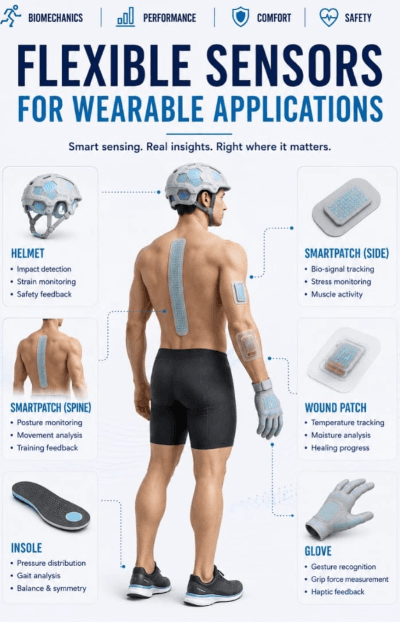
Sustainable Energy from Bio-Smart Materials toward Biocompatible Energy Systems
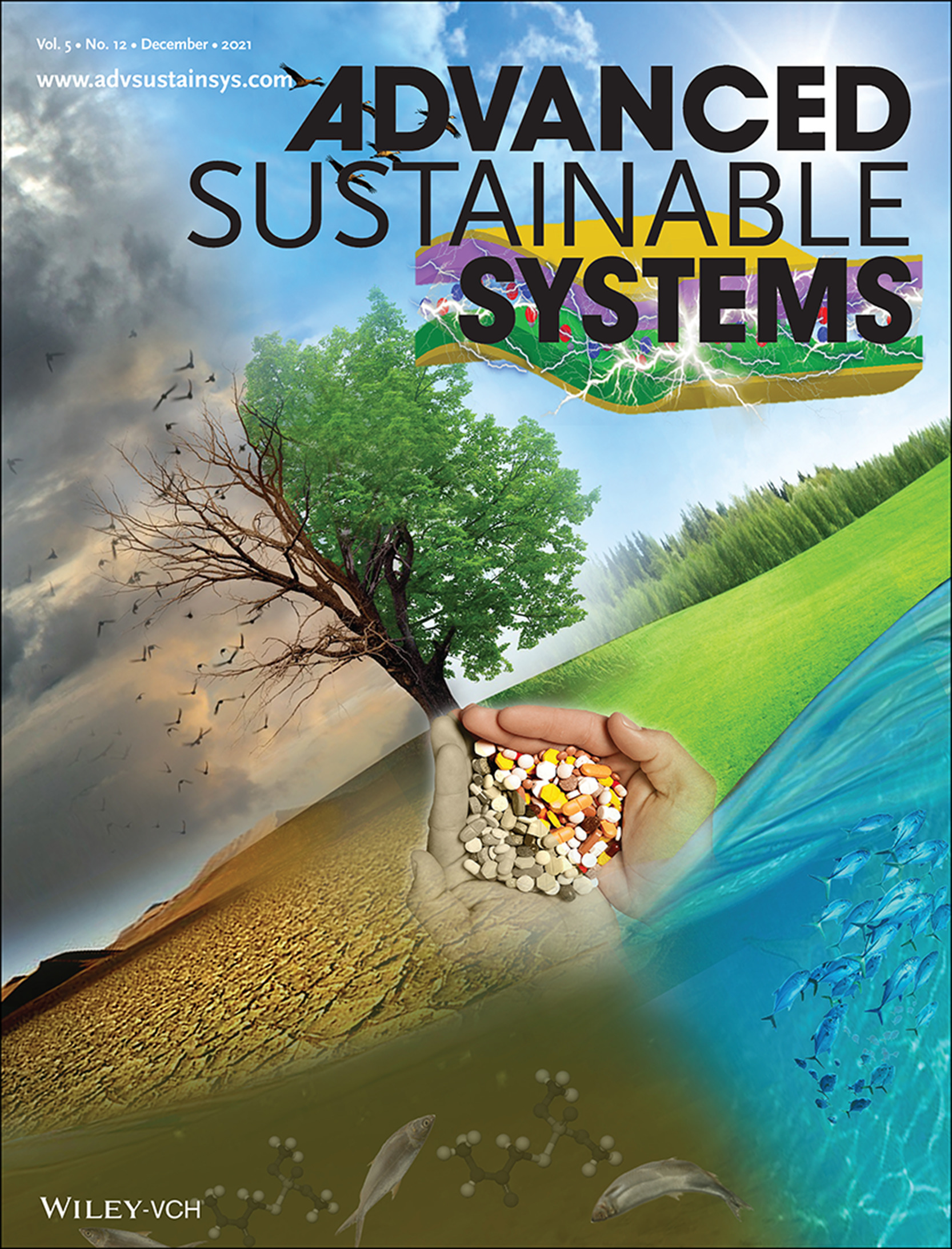
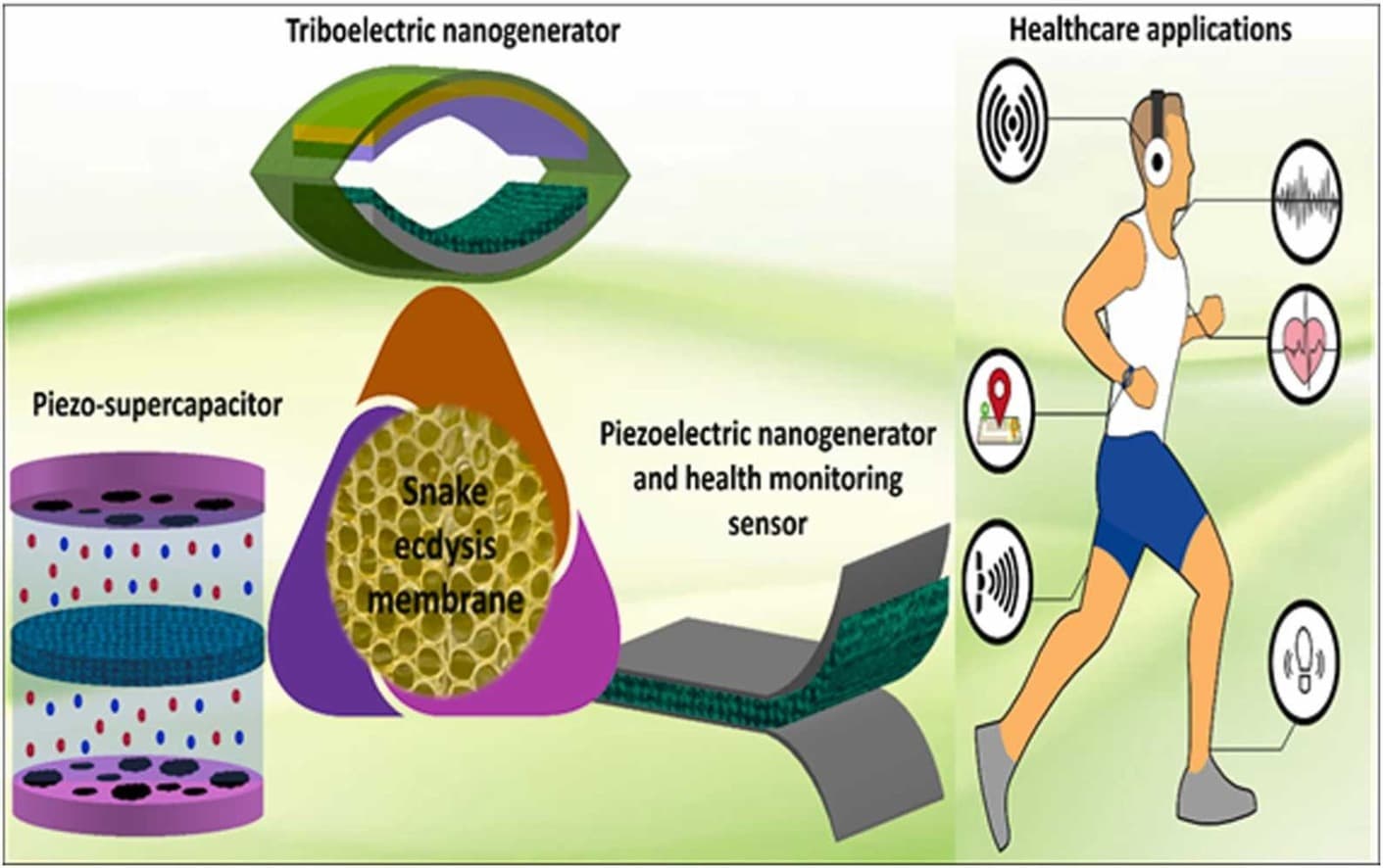
Utilizing biodegradable, biocompatible, and non-toxic natural substrates to construct wearable diagnostic systems, smart band-aids, gait insoles, impact-detecting helmets, and bio-integrated biomedical sensors.
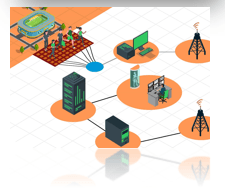 Pillar V
Self-Powered Technologies Empowered by AI and Metaverse
Applying machine learning, edge AI algorithms, and adaptive control systems directly to physical energy-harvesting hardware for predictive power optimization, self-diagnostics, and digital twin interaction.
Highlighted Research.
Get in Touch
Research Collaboration.
Interested in collaborating on research projects, requesting joint research, or visiting the research laboratory? We welcome partnerships with global academic institutions, industry, and security agencies.