Korea–Türkiye Research Discussions in Hydrogen Sensing: Invited Talk at Jeju National University
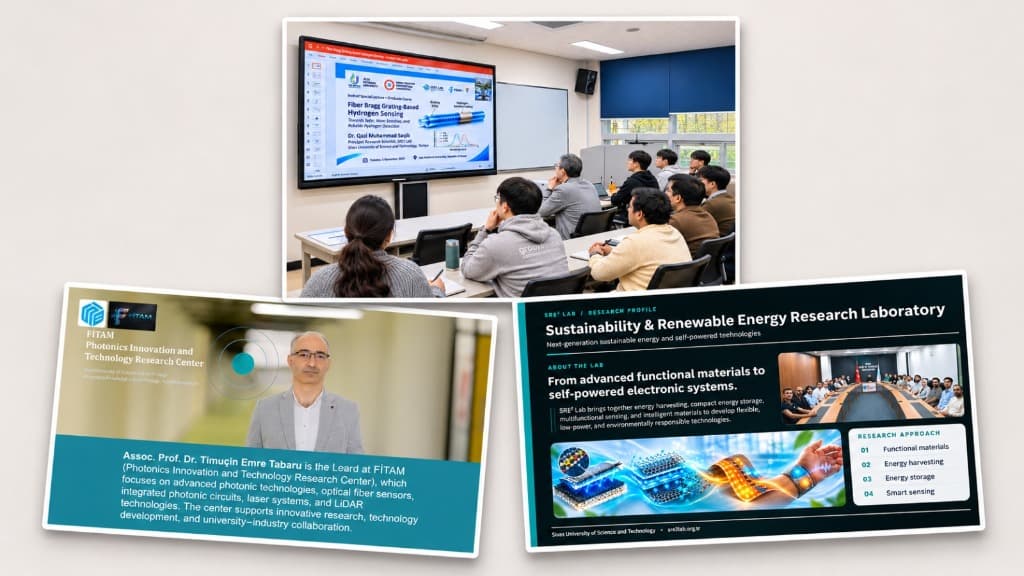
On November 3, 2026, Dr. Qazi Muhammad Saqib, Principal Research Scientist and Director of the Sustainability & Renewable Energy Research Laboratory (SRE² Lab) at Sivas University of Science and Technology (SBTÜ), delivered an invited graduate research lecture at Jeju National University (JNU), Republic of Korea.
The lecture, entitled "Fiber Bragg Grating (FBG)-Based Hydrogen Sensing: Towards Safer, More Sensitive, and Reliable Hydrogen Detection", addressed critical safety and sensing challenges in the global transition toward clean hydrogen energy infrastructure.
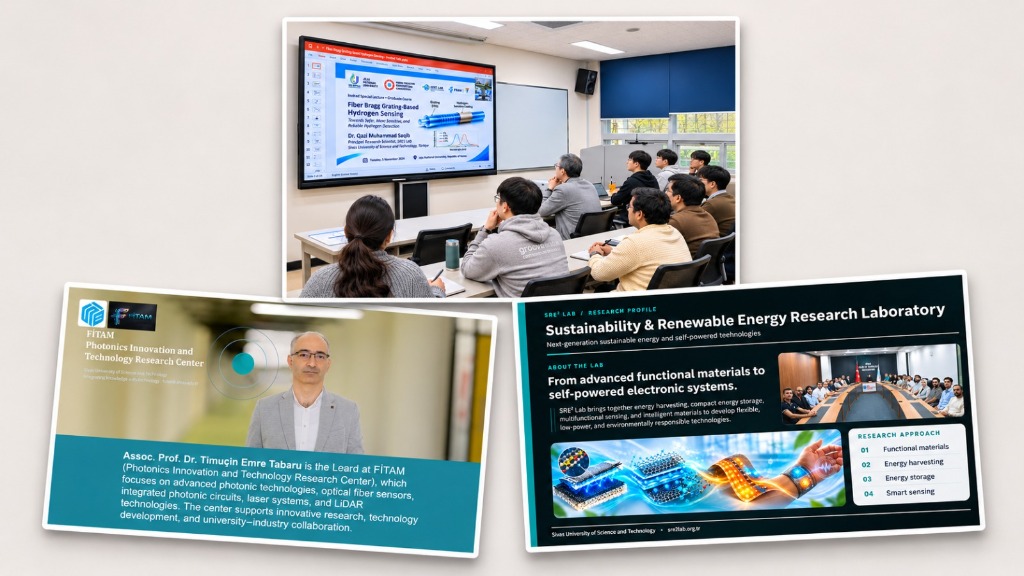
Korea–Türkiye Bilateral Research Discussions on FBG-Based Hydrogen Sensing at Jeju National University
Strategic Academic Alliances & Institutional Synergy
The research lecture provided a prominent international platform to highlight the advancing scientific capabilities, institutional vision, and research infrastructure of Sivas University of Science and Technology (SBTÜ) across photonics, smart materials, and autonomous sensing technologies.
The talk emphasized the unique, complementary institutional synergy between two pioneering research centers at SBTÜ and their collaborative interface with South Korea:
- FİTAM (Photonics Innovation and Technology Research Center): Led by Lead Scientist Assoc. Prof. Dr. Timuçin Emre Tabaru, FİTAM specializes in advanced photonic technologies, optical fiber sensors, integrated photonic circuits, laser systems, and LiDAR technologies, bridging deep scientific research with industrial application.
- SRE² Lab (Sustainability & Renewable Energy Research Laboratory): Directing interdisciplinary breakthroughs in electrical characterization, functional nanomaterials synthesis, energy harvesting nanogenerators (TENG/PENG), flexible electronics, and autonomous self-powered sensor integration.
- Jeju National University (JNU): Under the long-standing leadership and mentorship of Professor Jinho Bae, JNU continues to serve as an established international academic partner for cutting-edge sensor and energy harvesting breakthroughs.
Together, the integration of FİTAM's optical and photonic expertise with SRE² Lab's functional materials and electrical device engineering opens unprecedented collaborative opportunities for developing next-generation, explosion-safe hydrogen sensors.
Technical Focus: FBG-Based Hydrogen Detection
Hydrogen gas ((H_2)) is a cornerstone of the global clean energy economy, but its high flammability and low ignition energy mandate ultra-reliable, spark-free detection systems. Conventional electrical sensors present inherent risks of electrical sparks in hydrogen-rich atmospheres.
The lecture detailed:
- Intrinsically Spark-Safe Optical Interrogation: How Fiber Bragg Grating (FBG) optical sensors eliminate electrical spark hazards by utilizing light-based strain and refractive index modulation rather than electric current.
- Advanced Functional Coatings: Integration of metal hydrides, palladium alloys, and nanostructured functional overlays that induce mechanical lattice expansion upon hydrogen absorption, detectable by FBG wavelength shifts with extreme precision.
- Cross-Sensitivity and Environmental Resilience: Engineering temperature-compensated optical fiber geometries for continuous, drift-free operation in harsh aerospace, automotive, and industrial storage environments.
Acknowledgments & Looking Ahead
Dr. Saqib expressed profound gratitude to his mentor, Professor Jinho Bae (Jeju National University), for his continued scientific guidance and hospitality, and special thanks to Assoc. Prof. Dr. Timuçin Emre Tabaru and the FİTAM Research Center team for their vital support and collaborative momentum.
The bilateral discussions concluded with concrete plans for:
- Formulating joint Korea–Türkiye bilateral research proposals in optical hydrogen telemetry.
- Expanding student and researcher academic exchange pathways between JNU and SBTÜ.
- Co-authoring high-impact scholarly publications in top-tier international journals.
Türkçe Özet / Turkish Summary
Hidrojen Sensörlerinde Kore–Türkiye Araştırma İş Birliği
Sivas Bilim ve Teknoloji Üniversitesi (SBTÜ) SRE² Lab Kurucusu ve Baş Araştırmacısı Dr. Qazi Muhammad Saqib, Kore Cumhuriyeti Jeju Ulusal Üniversitesi’nde (JNU) "Fiber Bragg Izgarası (FBG) Tabanlı Hidrojen Algılama: Daha Güvenli, Hassas ve Güvenilir Hidrojen Tespiti" başlıklı davetli bir seminer verdi.Seminerde, FİTAM (Fotonik Uygulama ve Araştırma Merkezi) Lideri Doç. Dr. Timuçin Emre Tabaru öncülüğündeki fotonik ve optik fiber altyapısı ile SRE² Lab’ın fonksiyonel malzeme ve elektriksel karakterizasyon yetkinlikleri bir araya getirilerek hidrojen enerjisi güvenliğinde yeni nesil Kore–Türkiye araştırma projeleri değerlendirildi.